Registration is open
Registration for ISORC 2026 is open! (Day registration available) Click here for more information!
Keynote
From Safety to Resilience
“The world is a blooming, buzzing confusion,” wrote the philosopher William James — a striking description of a world in constant change, full of unpredictable surprises. It is precisely this kind of environment in which cyber‑physical systems must operate today.
AI was long seen as the solution — and in many ways, it works remarkably well. Yet it comes at a price: a growing list of additional challenges, particularly for safety‑critical systems. Addressing these challenges requires an architectural perspective. It calls for rethinking what we believe we know about safety architectures — and for developing new types of architectures and paradigms.
This talk introduces resilience as the next step beyond safety. It outlines the core ideas and illustrates how to move from traditional safety architectures toward intelligent resilience — enabling systems to optimize utility while preserving safety in uncertain and dynamic environments.
Speaker: Prof. Dr. Mario Trapp
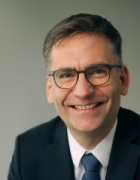
Prof. Dr. Mario Trapp (*1976) holds the chair “Engineering Resilient Cognitive Systems” and is also executive director of the Fraunhofer Institute for Cognitive Systems IKS in Munich. For his research focus on the engineering of resilient cognitive systems, he combines his many years of experience in the field of model-based safety engineering with the engineering of self-adaptive software systems. In addition to basic research, successful transfer to industrial practice is particularly important to him.,
Prof. Dr. Mario Trapp has held the Chair of Engineering Resilient Cognitive Systems at the Faculty of Computer Science at the Technical University of Munich since 2022. He studied Technoinformatics at the TU Kaiserslautern, where he received his PhD with distinction in 2005. In 2016, he also completed his habilitation at TU Kaiserlautern and was appointed as an apl. professor in the Department of Computer Science in 2018.